Peter Louis
Bombshell Wet Brush — Standard, 8⅞″
Bombshell Wet Brush — Standard, 8⅞″
Couldn't load pickup availability
A wet brush exists for one reason: hair is at its weakest when it is wet, and most brushes are not built for it.
Wet hair stretches. The bonds that hold it in shape are temporarily loosened by water, so a strand that would take real force to break when dry will give way under far less — and a stiff brush dragged through a wet knot is one of the most common causes of breakage there is.
How this one handles that
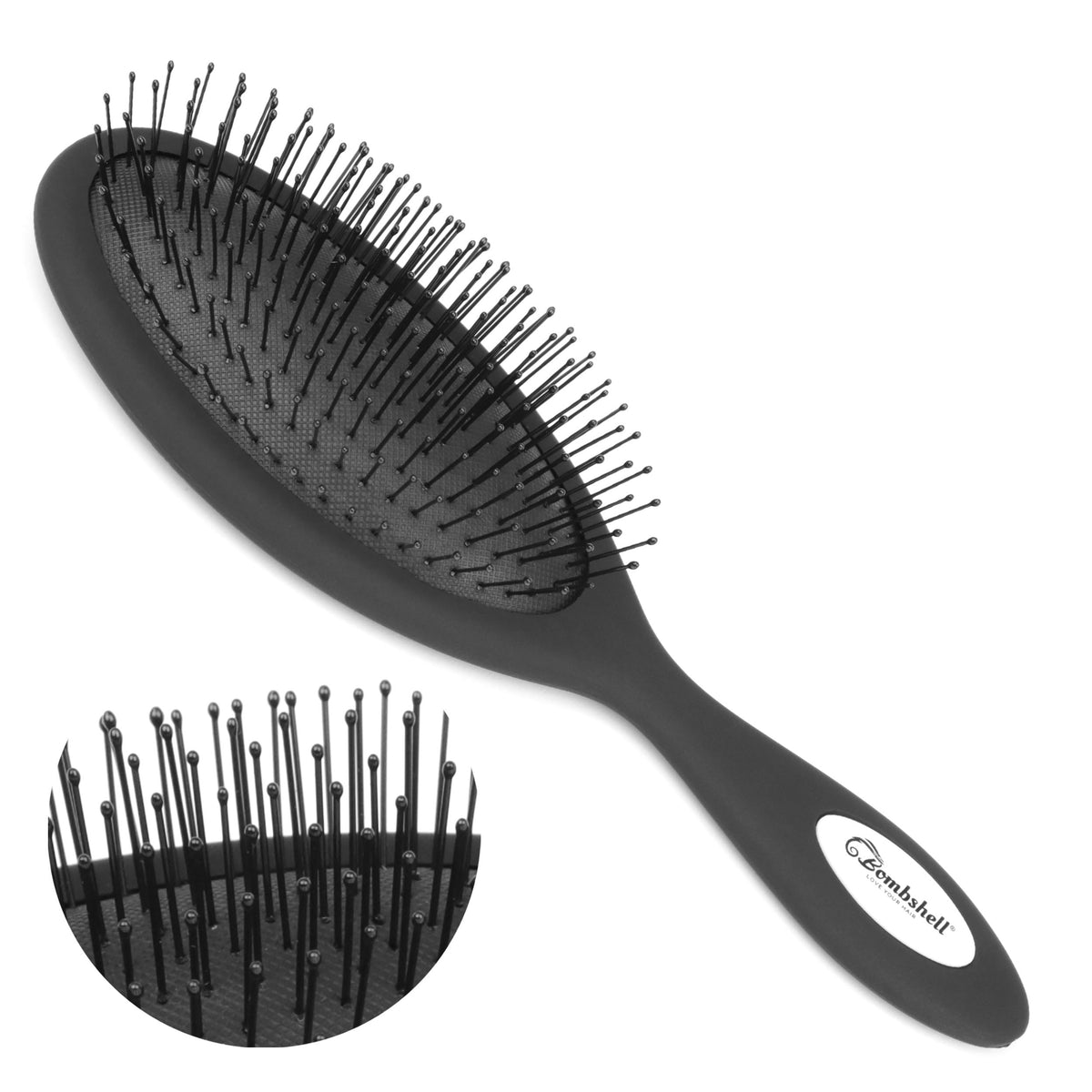
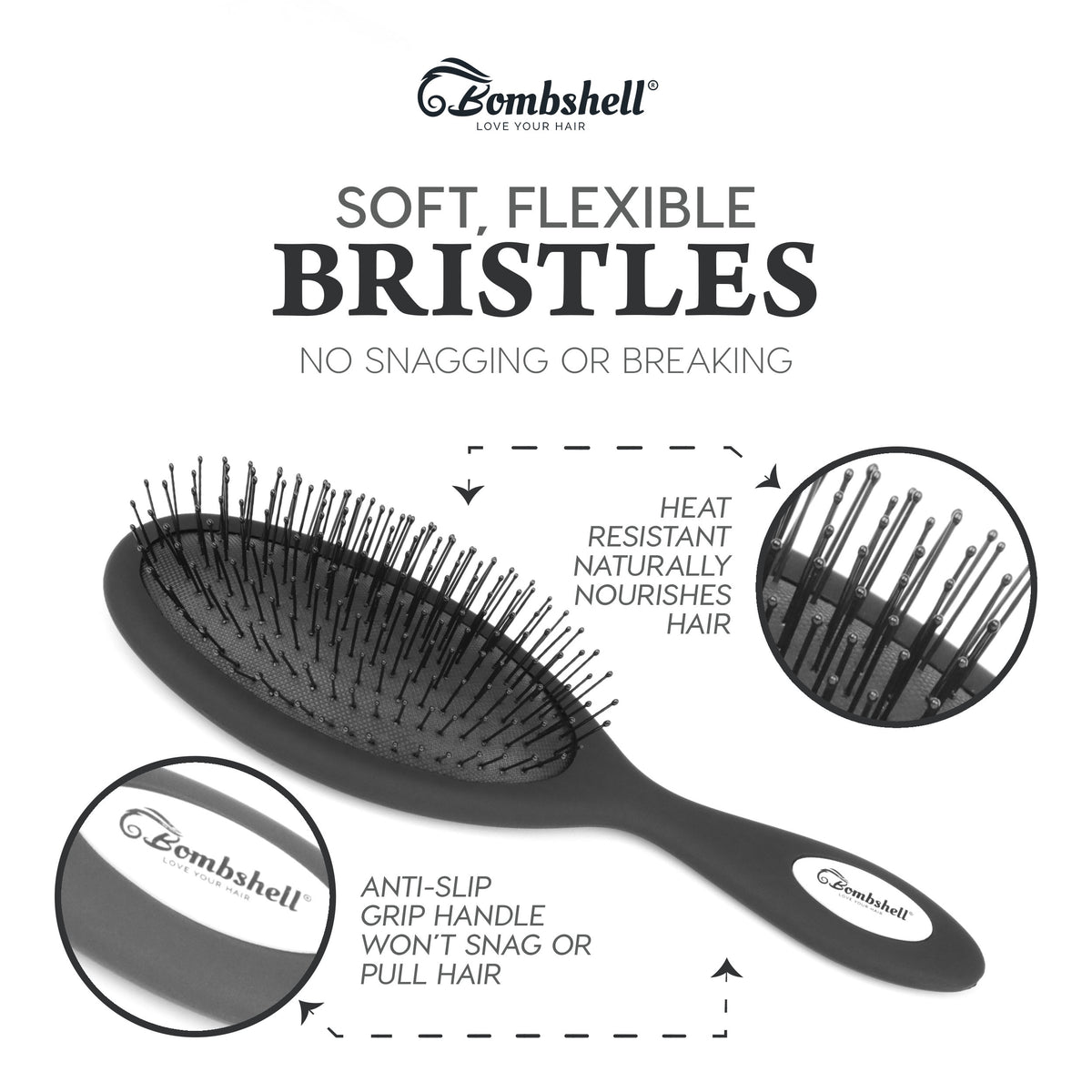
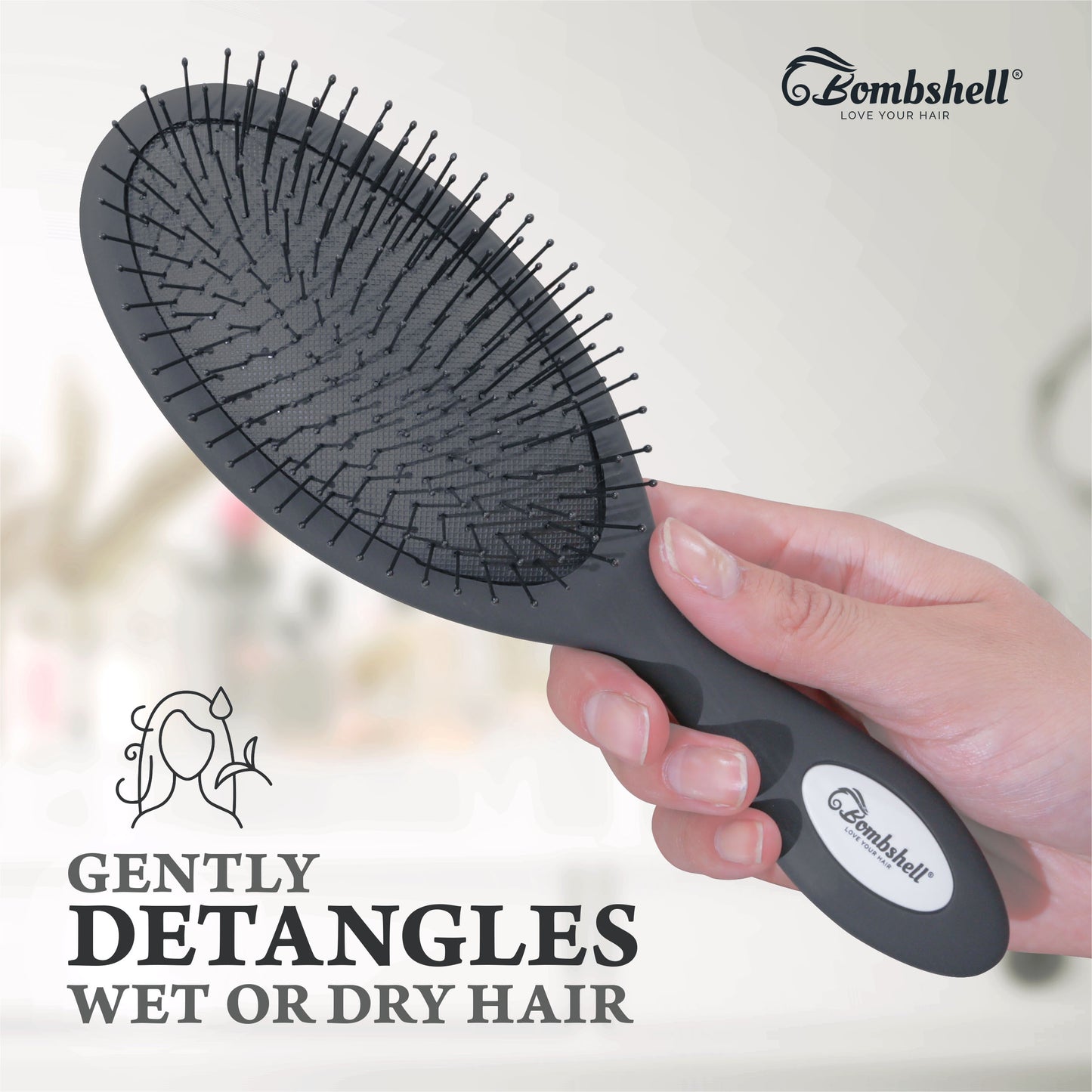
Long flexible nylon pins, three quarters of an inch, set in a rubberised air cushion. When a pin meets a knot it bends rather than forcing through it. The cushion gives at the same time, so the whole head of the brush flexes instead of transmitting the pull into the hair.
Every pin is ball-tipped — a small rounded bead on the end. That is what lets you use it on a scalp with any pressure at all without scratching.
The pins are widely spaced, which is the other half of it. A dense brush packs a tangle tighter; a spaced one lets the knot open up and come apart.
Nylon, not boar
There is no boar in this brush, and that is deliberate. Boar is soft and works across the surface of the hair — it polishes, and it would be useless in a wet tangle. Nylon is stiff enough to part hair and get through a knot.
So this is a detangling brush rather than a finishing one. If shine is what you are after, that is what the boar brushes in the range are for, used on dry hair afterwards.
The size
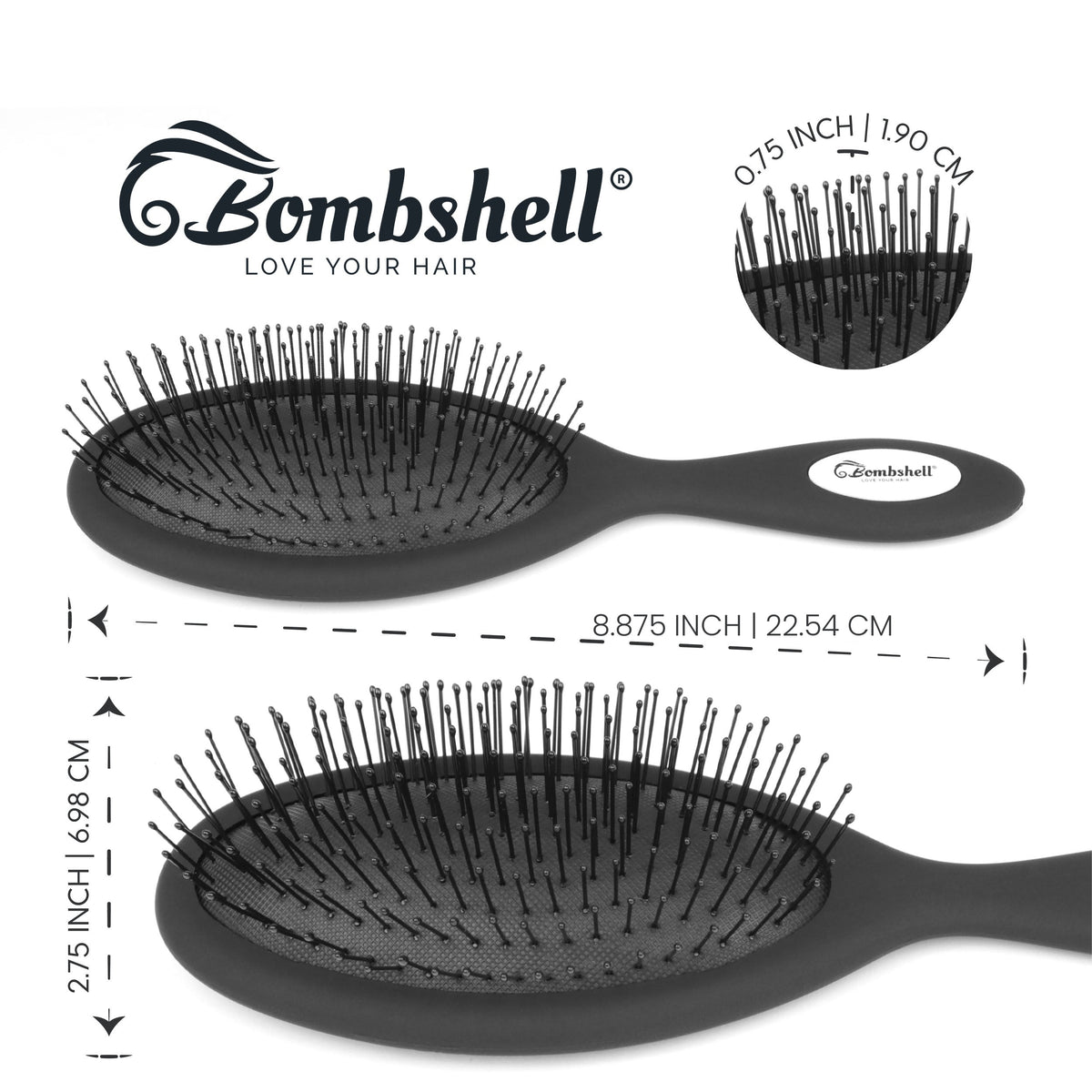
Eight and seven eighths of an inch long, two and three quarter inches across the head, with three quarter inch bristles. The full-size version, and the one for a whole head of long hair — it covers more ground per pass, so there are fewer passes.
There is a smaller pocket version at seven and three quarter inches if you want one for a bag.
The handle
Rubberised rather than smooth plastic, which matters here more than on a dry brush. Wet hands, wet handle, and conditioner on your fingers is exactly the combination that makes an ordinary brush slip.
How to use it
Start at the ends. Take the bottom two inches, work the tangles out of those, then move up an inch and repeat, until you can draw the brush from root to end without meeting resistance.
Never start at the roots on wet hair. Doing that collects every tangle in the length into one knot at the bottom, and then you are pulling all of it at once.
Get the worst of the water out with a towel first — blot, do not rub. Soaking hair is heavier and more fragile than damp hair.
Looking after it
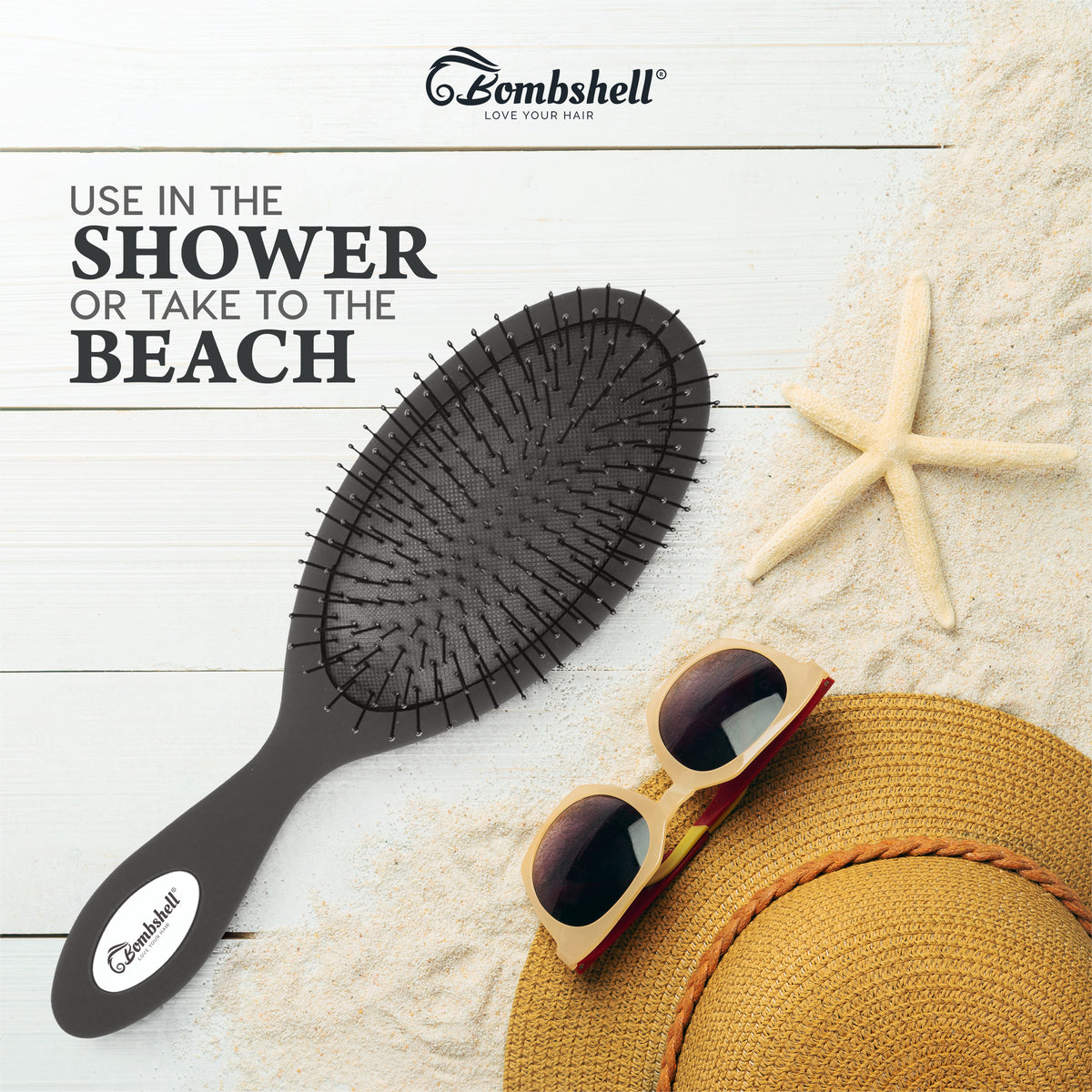
Rinse it and let it dry properly if you use it in the shower. Do not leave it face-down in standing water; the cushion takes water in and does not give it back.
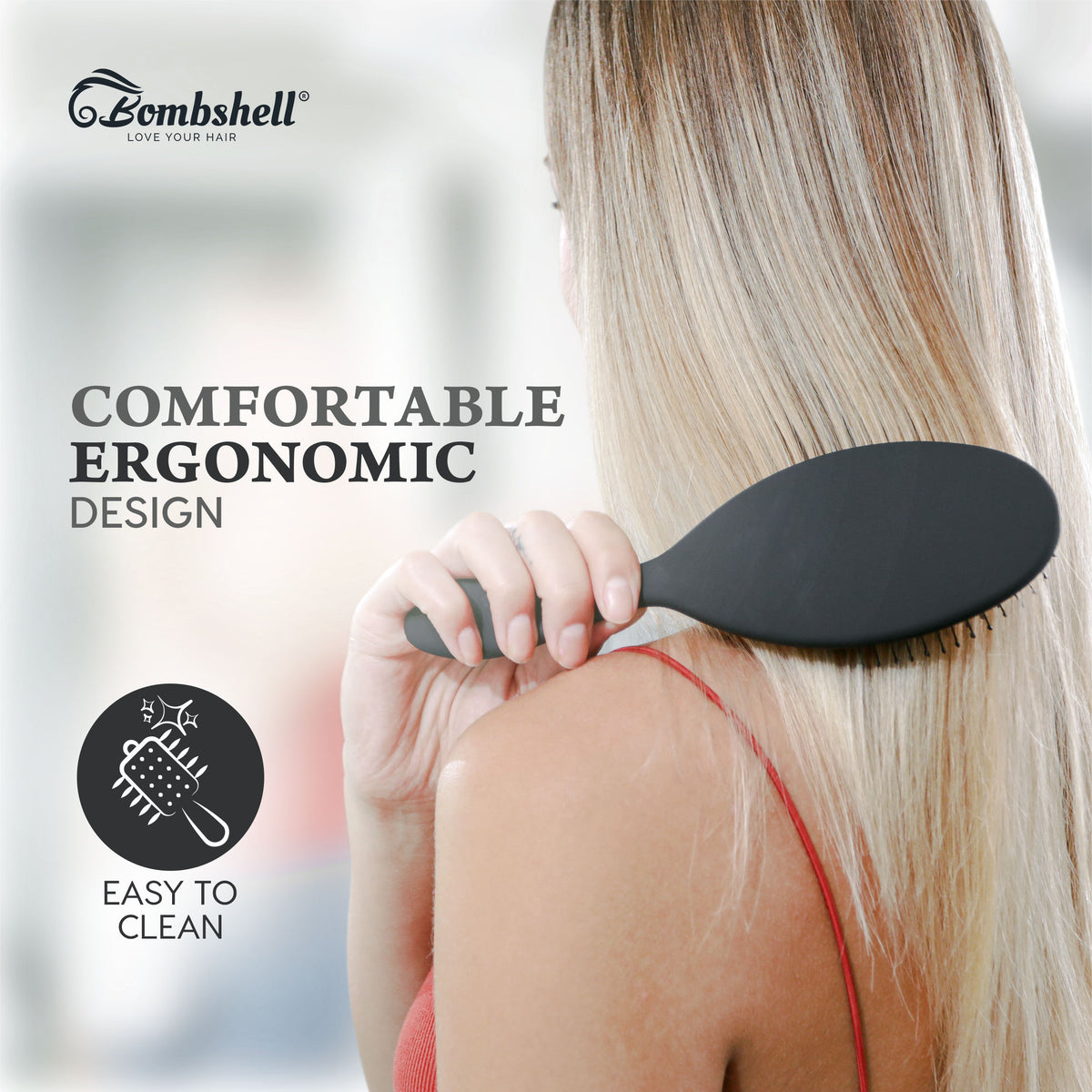
Clear the shed hair out of the pad regularly. Once hair mats between the rows the cushion stops flexing, and the flex is the whole point of the brush.
Where it came from
Peter Louis spent twenty-three years behind a chair in Manhattan — a salon on 57th Street, and years of blowouts before that, nine in the morning until ten at night. A supplier would bring a sample, it got used on clients, and it went back with a list of what was still wrong. That went on for years until one came back right.
Share