Peter Louis
Bombshell Oval Flexible Vent Brush — Boar & Nylon, 9¾″
Bombshell Oval Flexible Vent Brush — Boar & Nylon, 9¾″
Não foi possível carregar a disponibilidade de retirada.
This is the one I use on my own hair.
A vent brush is built for blow-drying. The head is open rather than solid, so air from the dryer passes straight through the brush and reaches the section from both sides at once. A solid brush blocks that air, which is why a blowout with the wrong brush takes twice as long and cooks the hair while you wait.
The flexible bend
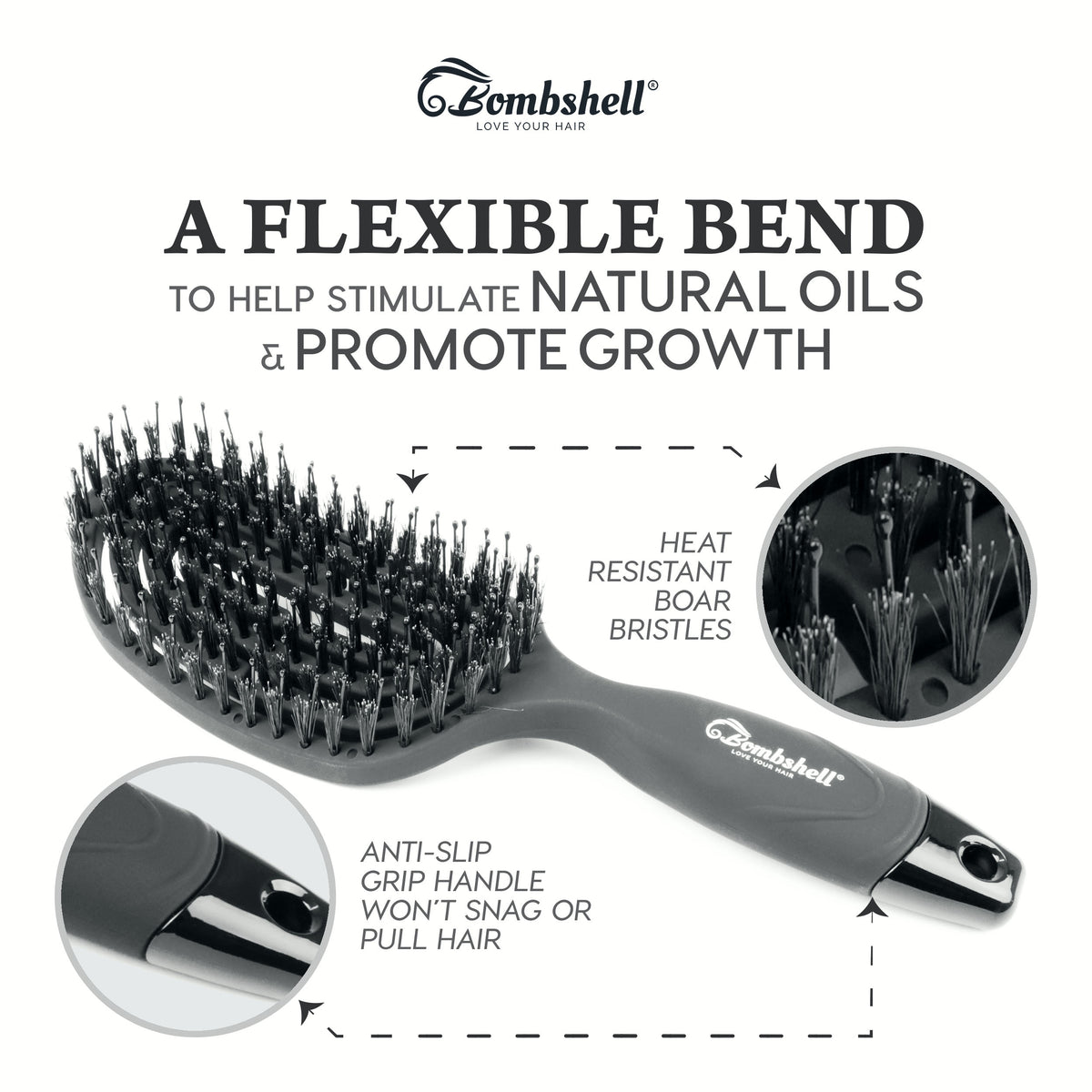
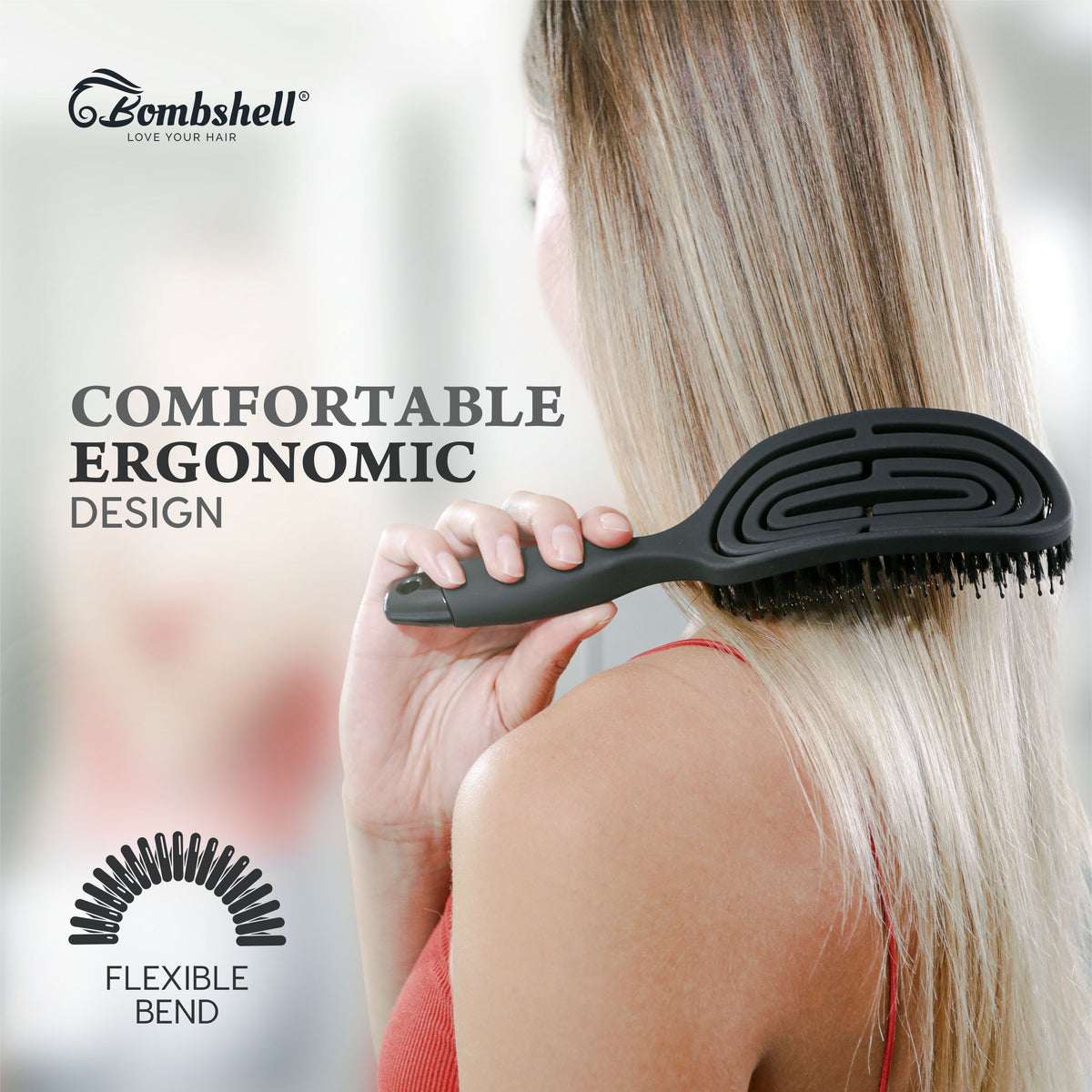
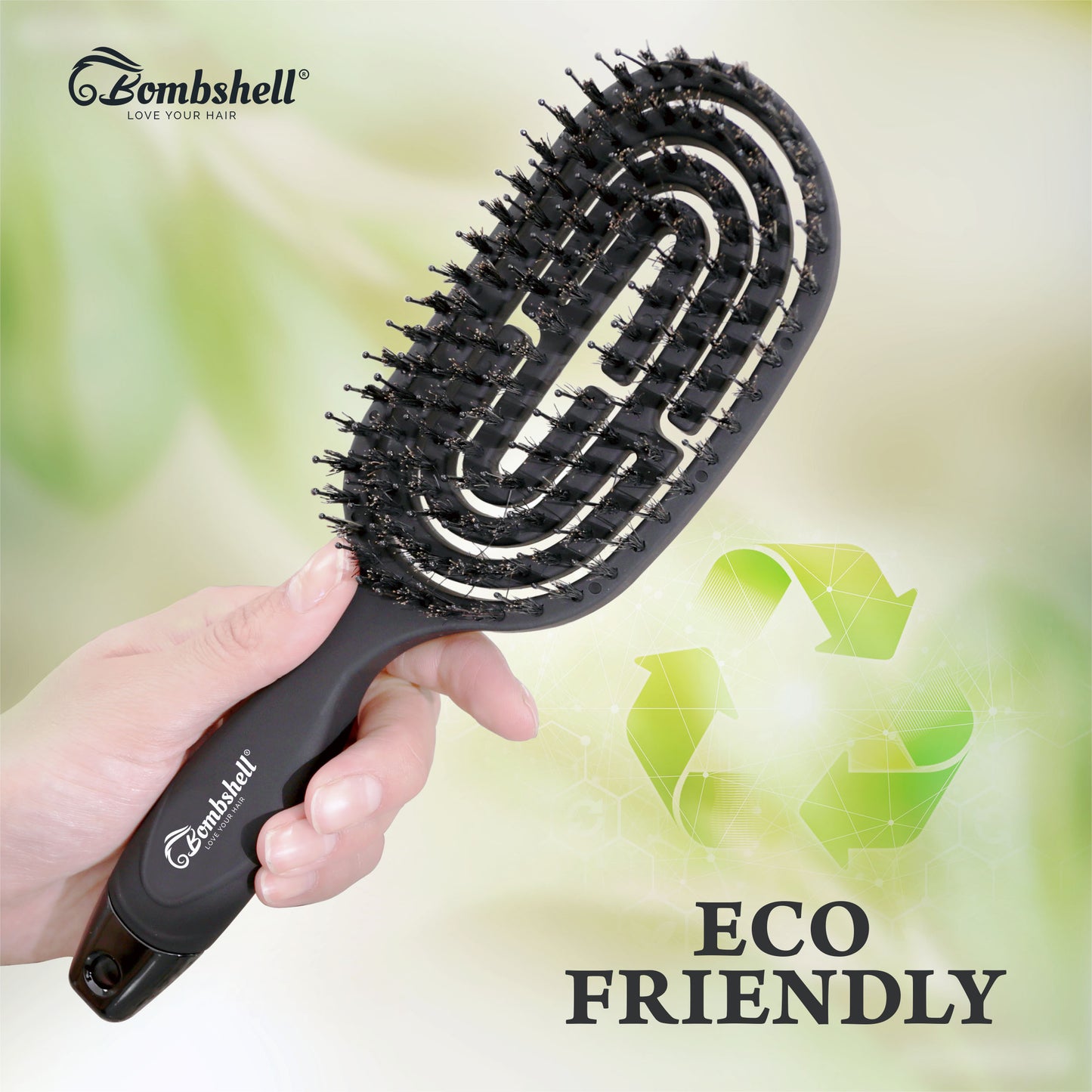
Look at the back of the head and you will see concentric oval rings with open channels between them. That is not decoration. A solid back cannot bend; rings hinged against each other can, so the head conforms to the curve of your skull as you pass over it rather than sitting rigid against one high point.
The same structure is what lets the air through.
Two things come from that. The bristles stay in contact along the whole pass instead of skidding, and when the brush meets resistance the head gives before the hair does. A rigid brush transmits every snag straight into the strand.
Two bristle lengths
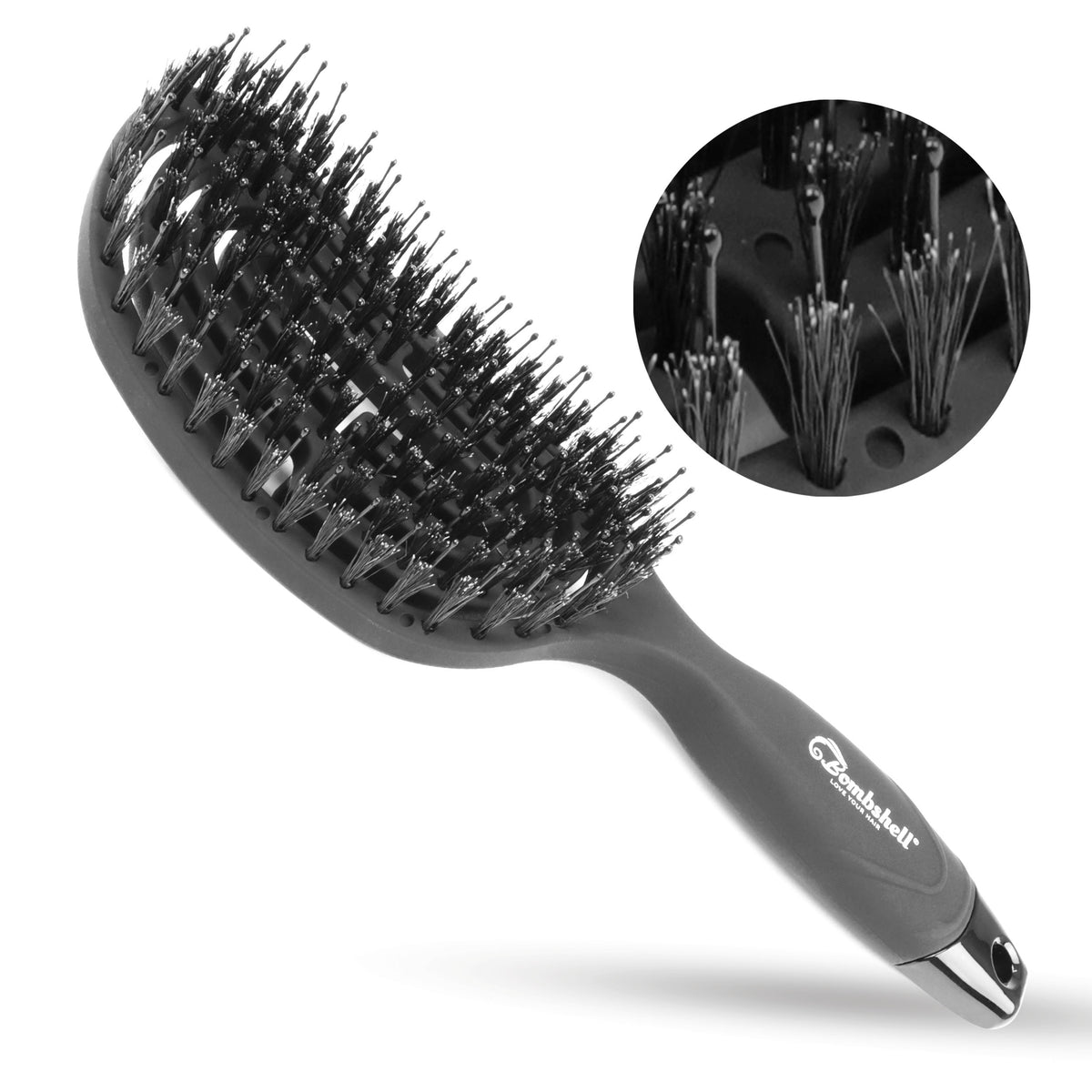
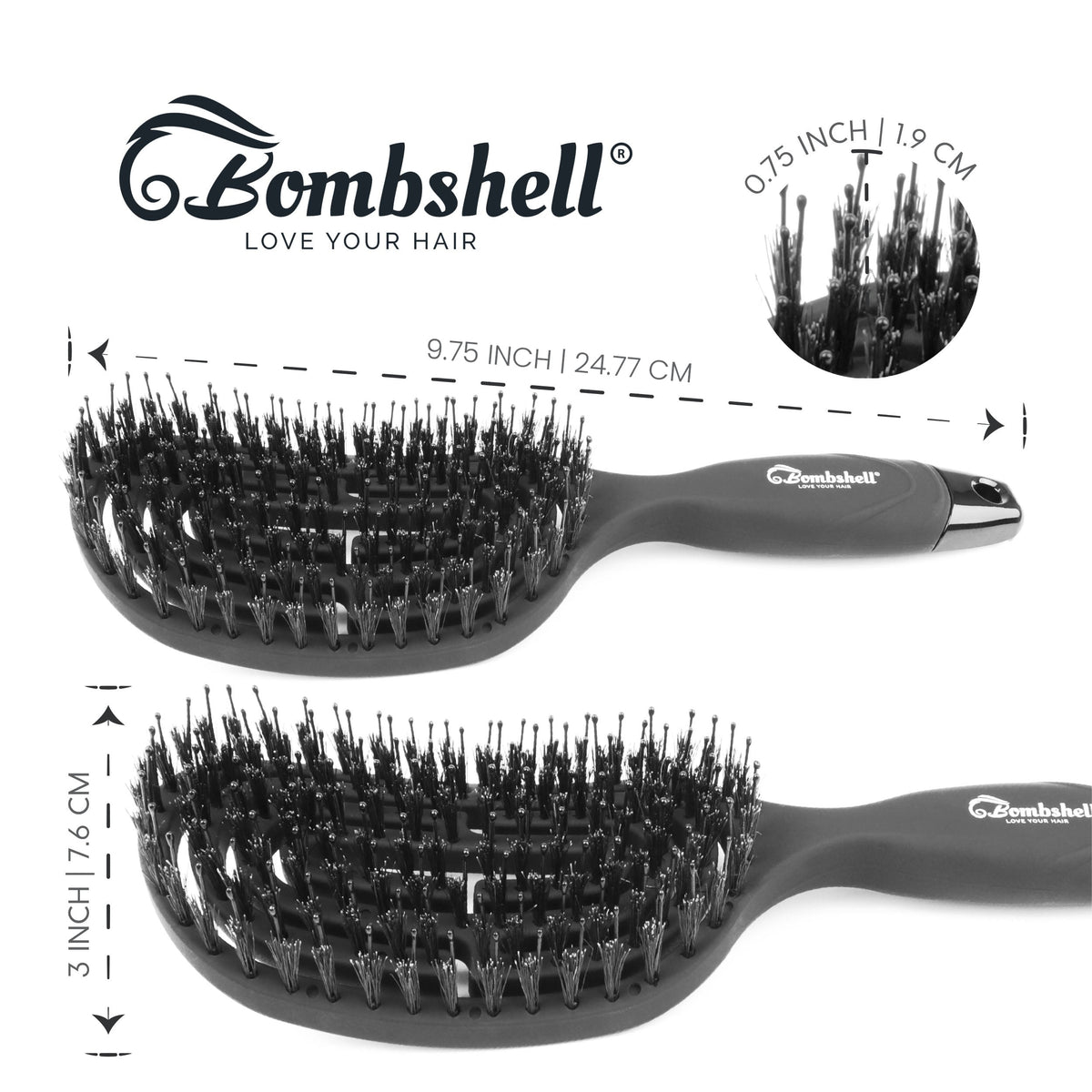
Boar at half an inch, white-tipped nylon at three quarters — so the nylon stands a quarter of an inch proud of the boar.
That gap is the design. The nylon reaches the hair first, parts the section and gets through any tangle, and each pin is ball-tipped so it can do that against the scalp without scratching. The boar sits underneath and meets the hair second, once the nylon has already done the hard part.
Boar sits close in structure to human hair and carries the scalp's own oil down the strand. That is where the shine comes from — your own oil moved down the length, not anything added to it. A brush with only nylon in it detangles and smooths but does not do this.
The size
Nine and three quarter inches long, three inches across the head. This is the larger of the two vent brushes, and the one for long or thick hair — the wide head covers more ground per pass.
There is a smaller version if this is more brush than your hair needs, and a nylon-only version at the same size if you want the detangling without the boar.
How to use it
Dry to about eighty per cent before the brush goes near the hair. A brush in soaking hair does nothing but stretch it.
Section, then work from the nape upward, keeping the dryer pointing the same way the brush is travelling — down the hair shaft, never against it. Because the head is vented you can hold the dryer closer to the back of the brush than you would with a solid one, and the air will still reach the hair.
On dry hair, long slow passes from root to end. That is the pass that moves the oil, and it is worth taking your time over.
Looking after it
Clear the shed hair out from between the bristle rows regularly. The vents make this easier than on a cushioned brush — you can push hair through from the back rather than picking at it.
Boar holds onto shed hair more than nylon, so this needs doing more often than on an all-nylon brush.
Where it came from
Peter Louis spent twenty-three years behind a chair in Manhattan — a salon on 57th Street, and years of blowouts before that, nine in the morning until ten at night. A supplier would bring a sample, it got used on clients, and it went back with a list of what was still wrong. That went on for years until one came back right.
Share